

Scientism, Religion, and Our Limits of Knowing
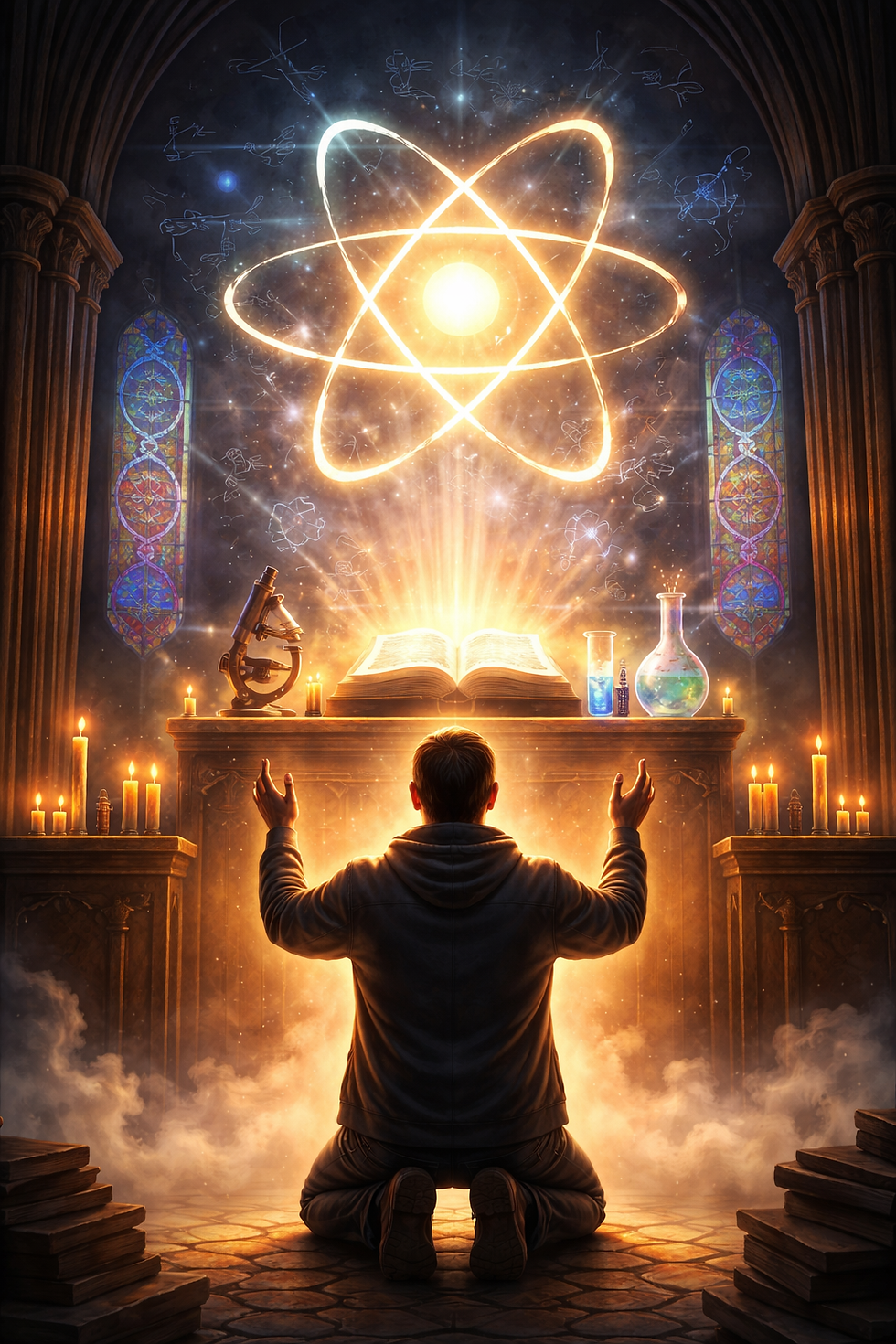
Why Science Alone Cannot Explain the Full Human Experience
“The public has a distorted view of science, because children are taught in school that science is a collection of firmly established truths. In fact, science is not a collection of truths. It is a continuing exploration of mysteries.”— Freeman Dyson
Scientism and the Worship of Science
Scientism is a worldview that places an excessive emphasis on science and the scientific method, while dismissing or minimizing other forms of knowledge such as philosophical, spiritual, experiential, and aesthetic ways of understanding. It is a form of reductionism that attempts to explain all aspects of reality solely through measurable, physical, and natural processes.
Science itself is not the problem. Science is one of humanity’s most powerful tools for understanding the physical world, advancing medicine, and improving quality of life. The issue arises when science is elevated into a belief system rather than recognized as a method of inquiry. When science is treated as the only valid source of truth, it becomes dogma rather than discovery.
This mindset can narrow how we understand human experience. Consciousness, meaning, values, intuition, morality, creativity, and spiritual awareness do not lend themselves easily to laboratory conditions, yet they are central to how people live, suffer, heal, and grow.
As a Metaphysician, a Spiritual Crossing Guard, my work often involves helping people navigate the tension between scientific explanations and lived inner experience. Many individuals come to me feeling confused or invalidated because their spiritual or energetic experiences do not fit neatly into material models of reality. Scientism can unintentionally dismiss these experiences rather than explore them with curiosity and discernment.

The Limits of Science as a Total Explanation
One of the central problems with scientism is the assumption that science can answer every meaningful question. Science excels at explaining how things function, but it is not designed to answer why questions related to purpose, ethics, meaning, or values.
Questions such as:
What gives life meaning?
How should we live ethically/morally?
What is consciousness?
How do inner experiences shape healing and identity?
These aren't failures of science. They are questions that fall outside its scope.
Additionally, science is not as neutral or objective as it is often portrayed. Scientific inquiry is shaped by cultural norms, funding priorities, historical context, and human bias.
Methods evolve. Theories change. What is considered settled truth today may be revised tomorrow. Treating science as absolute rather than provisional limits intellectual humility and curiosity.
A more integrated approach honors science without turning it into a belief system that replaces philosophy, ethics, psychology, or spirituality.
Where Spiritual Awareness Fits In
Spirituality does not require rejecting science. It asks for discernment and integration.
As a Spiritual Crossing Guard, I work at the intersection of logic, intuition, and lived experience. This role is not about promoting blind belief, but about helping individuals recognize boundaries between what science can explain, what spirituality explores, and where personal experience must be respected without being pathologized or dismissed.
Spiritual awareness includes understanding inner perception, energetic sensitivity, moral agency, and personal responsibility. These aspects of human life exist whether or not they can be quantified, and ignoring them often creates imbalance rather than clarity.
What About Religion?
Religion is a complex and multifaceted aspect of human culture. At its core, religion involves shared beliefs, practices, and rituals oriented toward a higher power, ultimate reality, or deeper truth. These beliefs are often expressed collectively through worship, tradition, and moral frameworks.
Religions take many forms. Monotheistic traditions such as Christianity, Judaism, and Islam center on one God. Polytheistic traditions such as Hinduism and Shintoism recognize multiple divine expressions. Other traditions such as Buddhism and Taoism focus on inner transformation, awareness, and alignment rather than a personal deity.
Religious belief systems often address questions of purpose, morality, suffering, and the afterlife. Practices such as prayer, meditation, ritual, pilgrimage, and ethical observance help individuals connect with meaning and community.
Religion can offer grounding, identity, and moral guidance. It can also become rigid or divisive when beliefs are enforced without reflection or compassion. Just as scientism can harden science into dogma, religion can harden faith into control rather than wisdom.

Moving Toward a More Integrated Understanding
Neither science nor religion alone can fully explain the human experience. Science explains mechanisms. Religion and spirituality explore meaning. Philosophy examines ethics and logic. Lived experience reveals what theories cannot.
A more holistic approach honors multiple ways of knowing without collapsing them into one dominant framework. This integration allows people to remain intellectually honest while also acknowledging inner experience, moral responsibility, and spiritual discernment.
This is the space where my work as a Spiritual Crossing Guard lives. It is about helping people cross from confusion to clarity, from fragmentation to integration, and from false certainty to grounded awareness. Not by rejecting science or religion, but by understanding their limits and their proper roles.
Understanding reality requires humility, curiosity, and balance. Science explores mysteries. Spirituality gives them context. Together, they allow us to engage the world with both intelligence and wisdom.

How are sleep and dreams connected to all of this?
Sleep and dreams are a gateway to other states of consciousness and wellness. In dreams, our soul calls us. If we choose to pay attention, this is where we can spark or elevate our spiritual awakening and overall health. We can connect to a greater place of knowledge than we do in waking life alone. The ego takes a back seat and our higher self speaks from a place of truth via symbols, whether you remember or not.
Wishing You Wholeness



Comments